Marta Minujín
b. 1943, Buenos Aires, Argentina
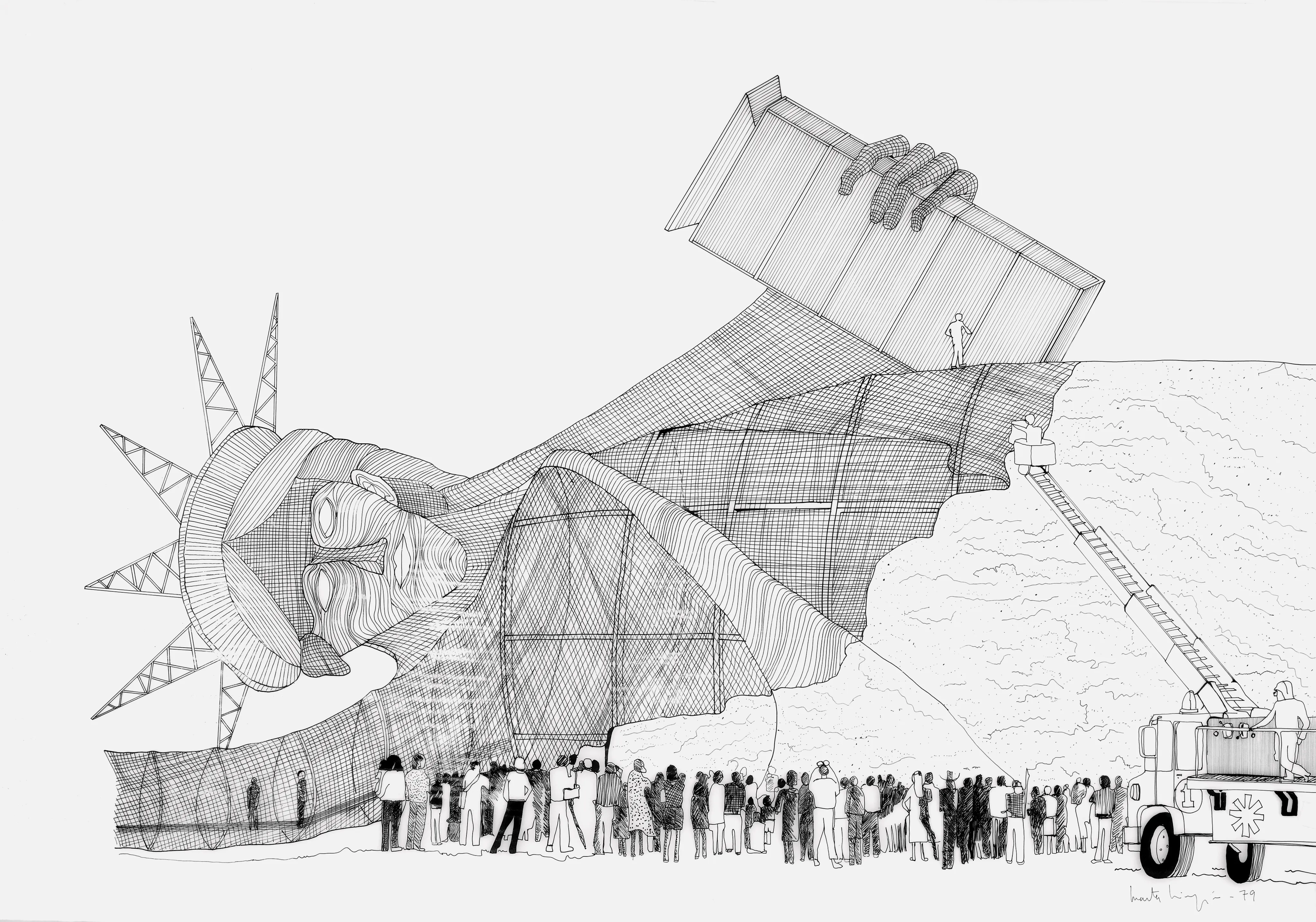
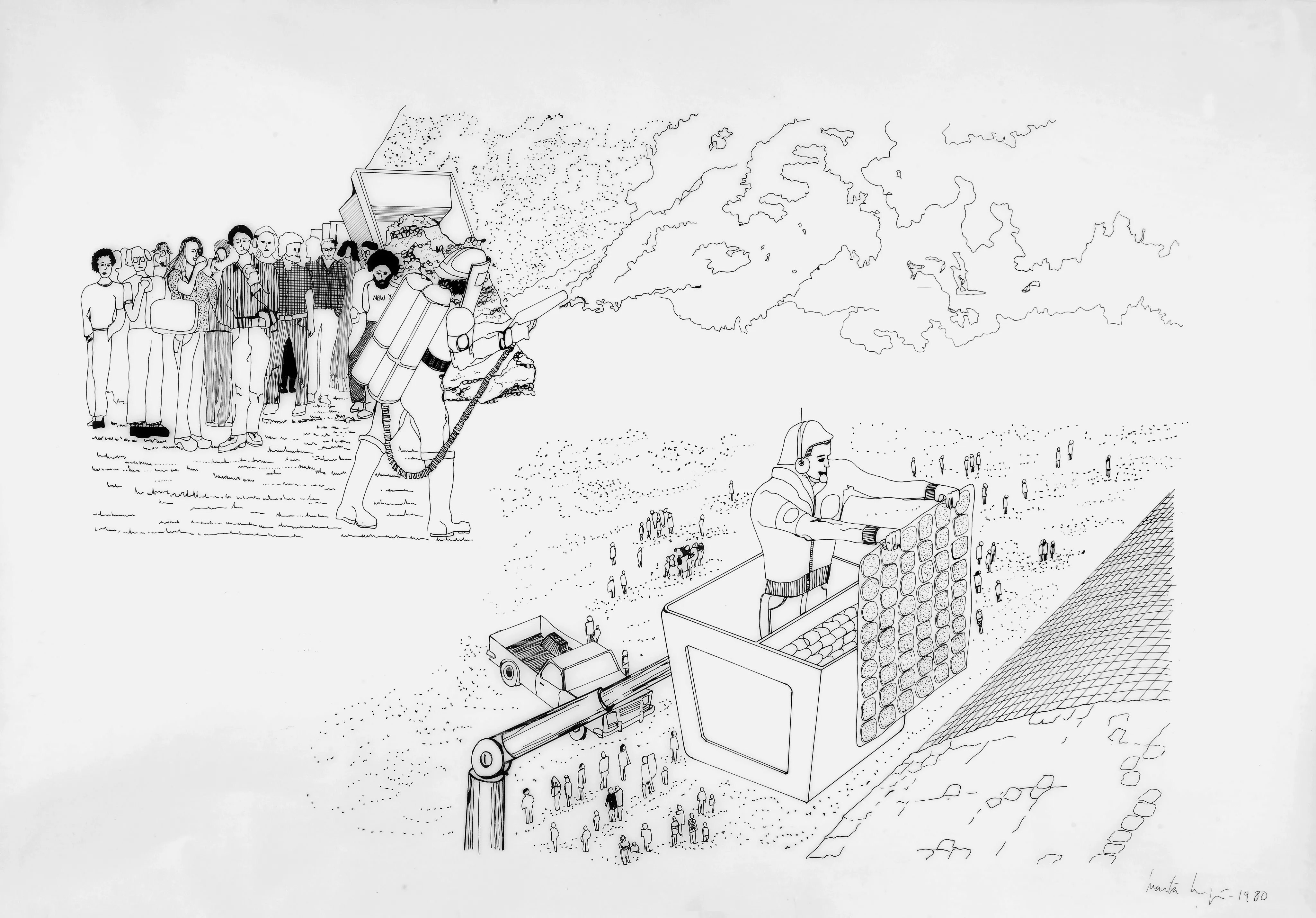
The Transformation of the Statue of Liberty into Something Edible, 1980
Ink on paper vellum
Solomon R. Guggenheim Museum, New York,Guggenheim UBS MAP Purchase Fund 2014.38
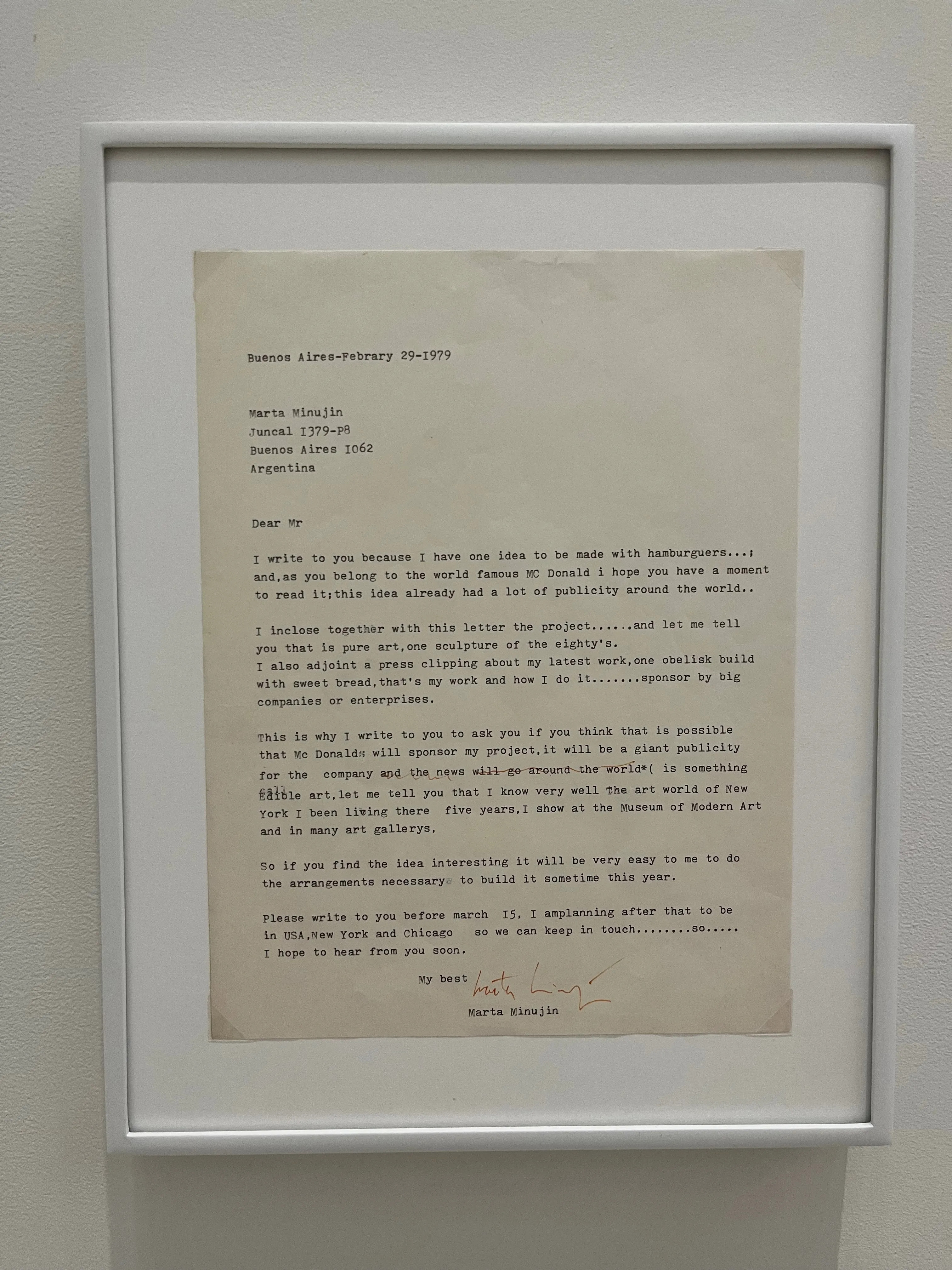
February 29, 1979
Typewritten letter with felt-tip pen
Solomon R. Guggenheim Museum Archives, New York A2014.36
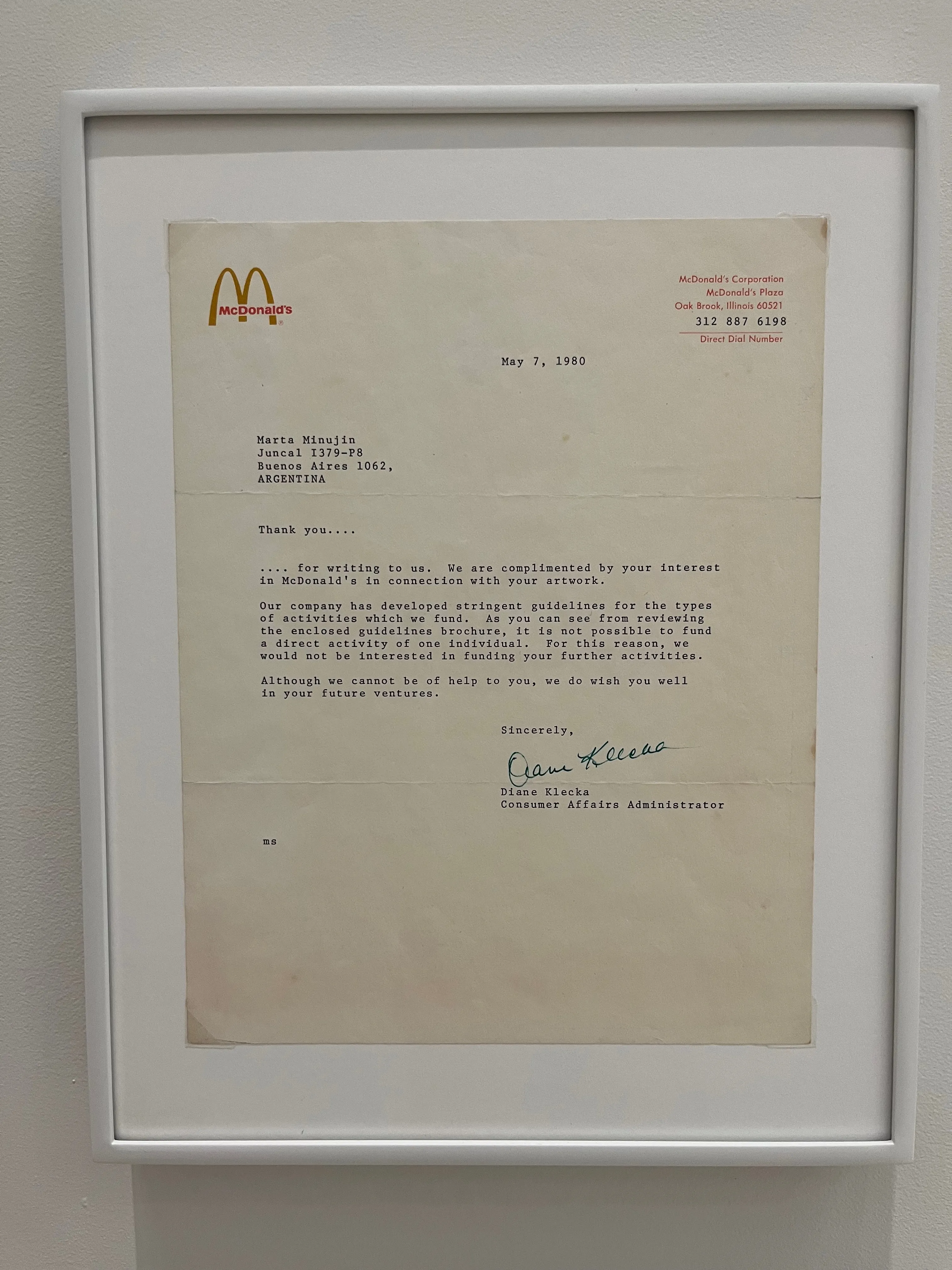
Letter from Diane Klecka, Consumer Affairs Administrator, McDonald’s Corporation, to Marta Minujín
May 7, 1980
Typewritten letter with felt-tip pen
Solomon R. Guggenheim Museum Archives, New York A2014.37
A pioneer of Happenings, performance, soft sculpture, and video, Marta Minujín developed an irreverent practice that reflects a sustained skepticism toward the collectible art object. She often employs ephemeral materials—cardboard, fabric, and food—to create works that are both monumental and inherently unstable. This proposal, documented in the drawings and correspondence on view, exemplifies her interest in spectacle and provocation.
In 1979, Minujín wrote to the McDonald’s Corporation requesting sponsorship for what she described as “an idea to be made with hamburgers.” She proposed installing an iron replica of the Statue of Liberty on its side in New York’s Battery Park, reimagined as a dormant icon with interior passageways that visitors could enter. On the tenth day, McDonald’s employees would ascend fire truck ladders to cover the sculpture with hamburger patties, staging a large public meal that would then be “cooked” in place with flamethrowers. The project ultimately remained unrealized.