Vasily Kandinsky
b. 1866, Moscow; d. 1944, Neuilly-sur-Seine, France
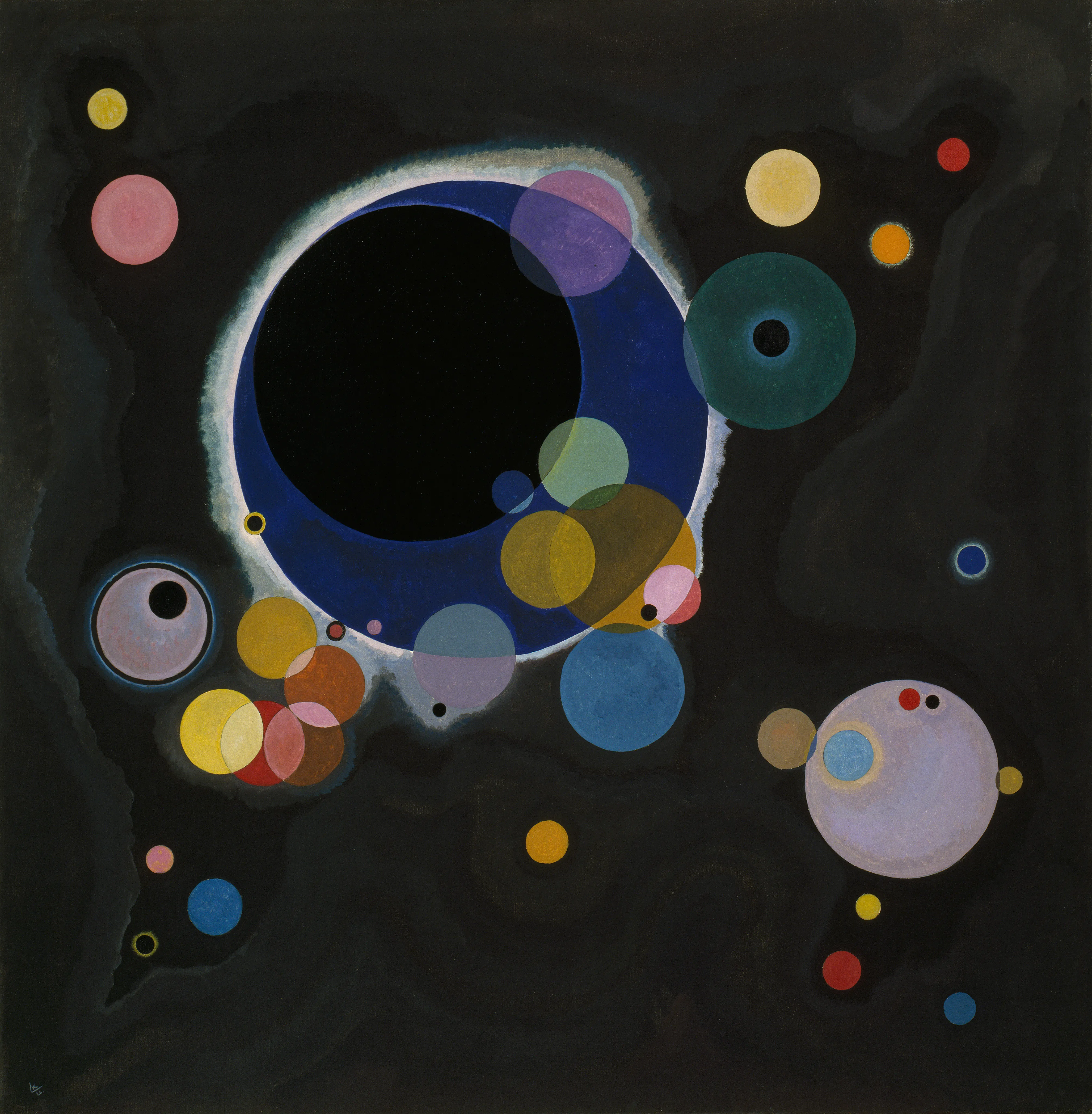
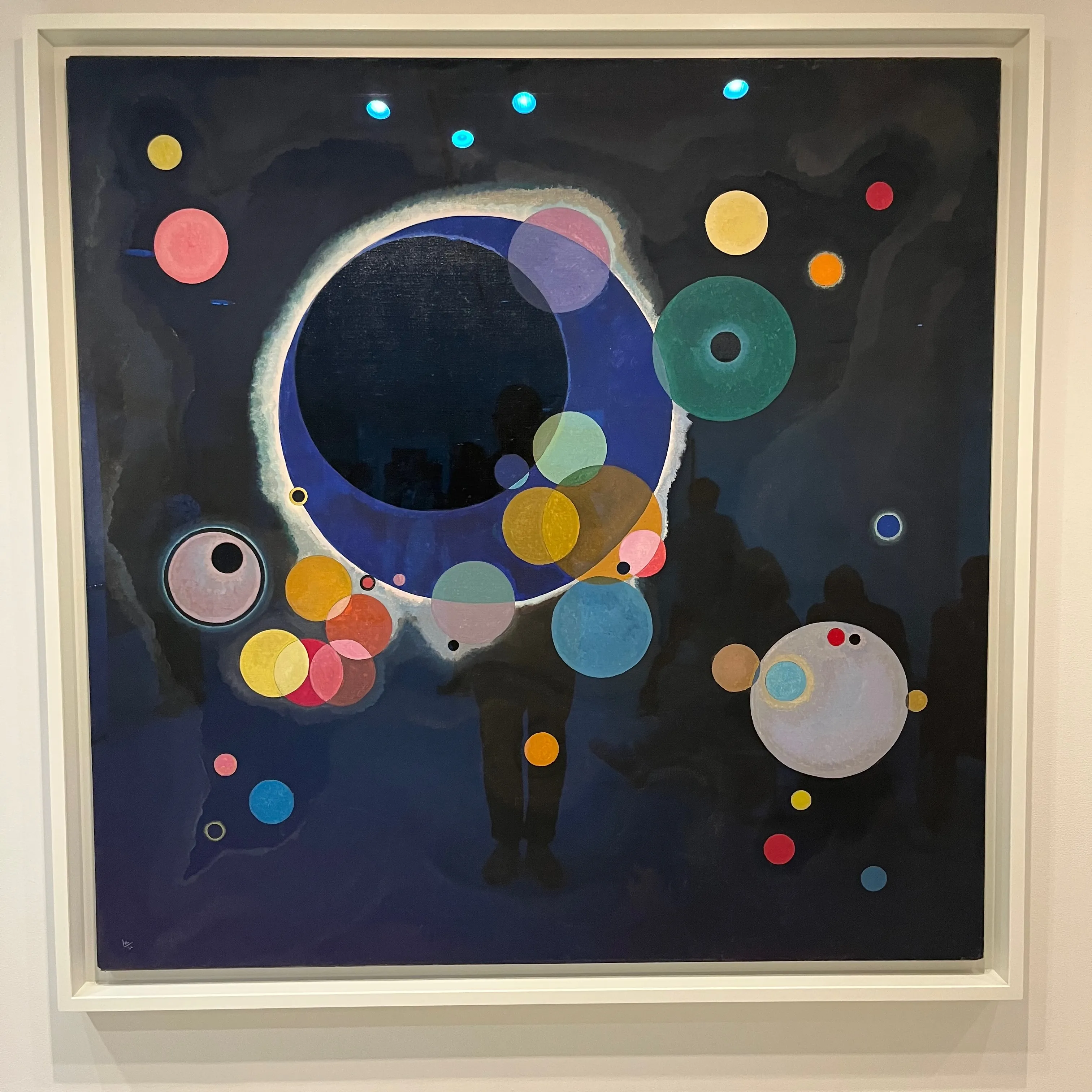
Several Circles, January–February 1926
Oil on canvas
In Several Circles, Vasily Kandinsky layered carefully delineated, transparent circles to produce a variance of rich chromatic relationships across flat, oscillating planes. He then applied varnish to select forms, most notably the largest black circle, introducing an interplay of matte and glossy surfaces. The composition's dark background, with its atmospheric effects, suggests the infinite expanse of the cosmos and evokes celestial motion. Through this dynamic yet ordered universe, Kandinsky sought to transcend formal properties and give visual form to spiritual and psychological conditions. Of his recurring circle motif, he remarked "If I make such frequent, vehement use of the circle in recent years, the reason (or cause) for this is not the geometric form of the circle, or its geometric properties, but my strong feeling for the inner force of the circle and its countless variations."
While this work is not part of the Guggenheim's Thannhauser Collection, the Thannhauser family critically championed the work of experimental and emerging artists in the early twentieth century. Kandinsky frequently exhibited his work at the Thannhausers' Moderne Galerie, whose rooms he designated as "perhaps the most beautiful exhibition spaces in all of Munich."