nikhil.io

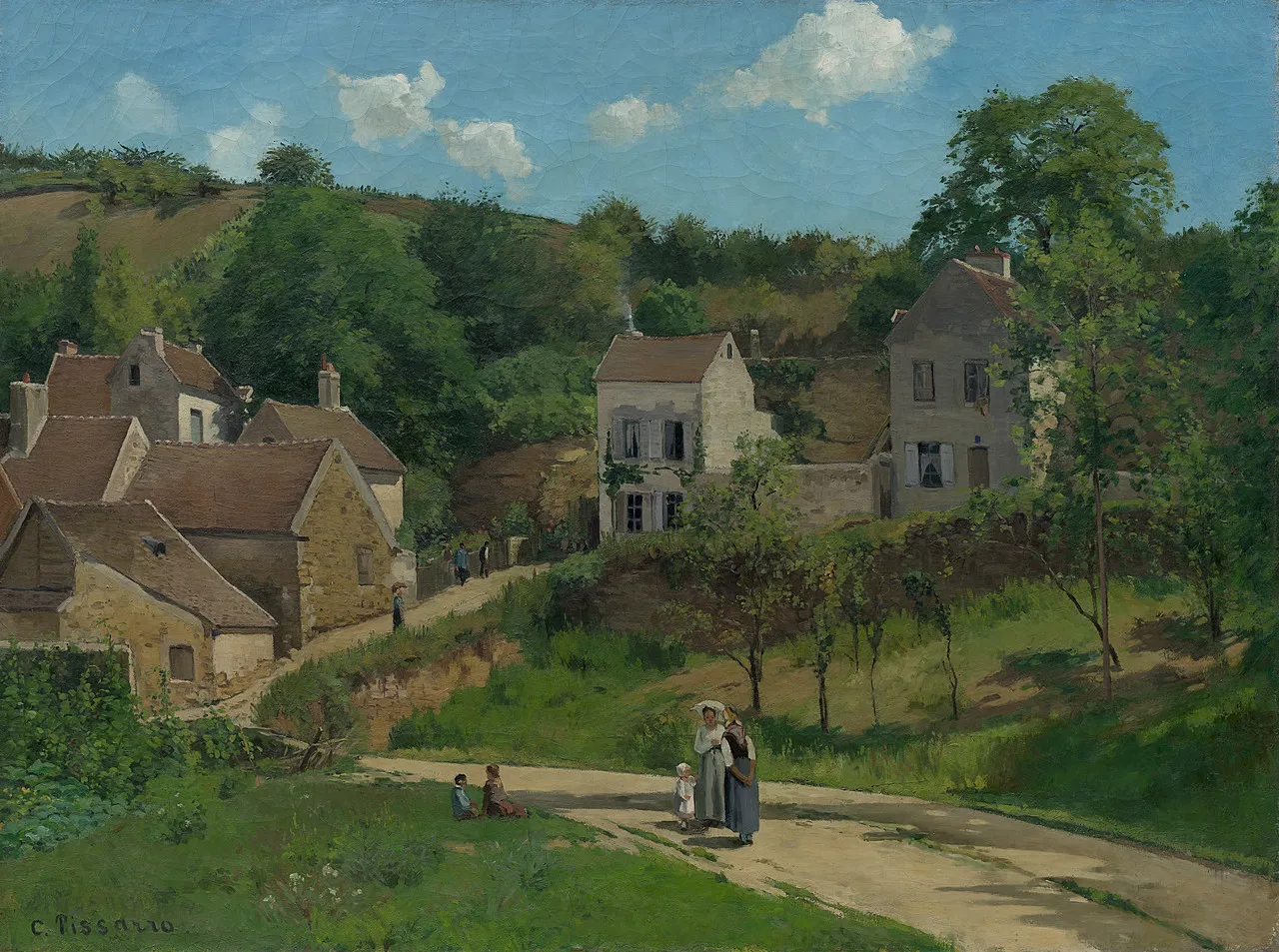
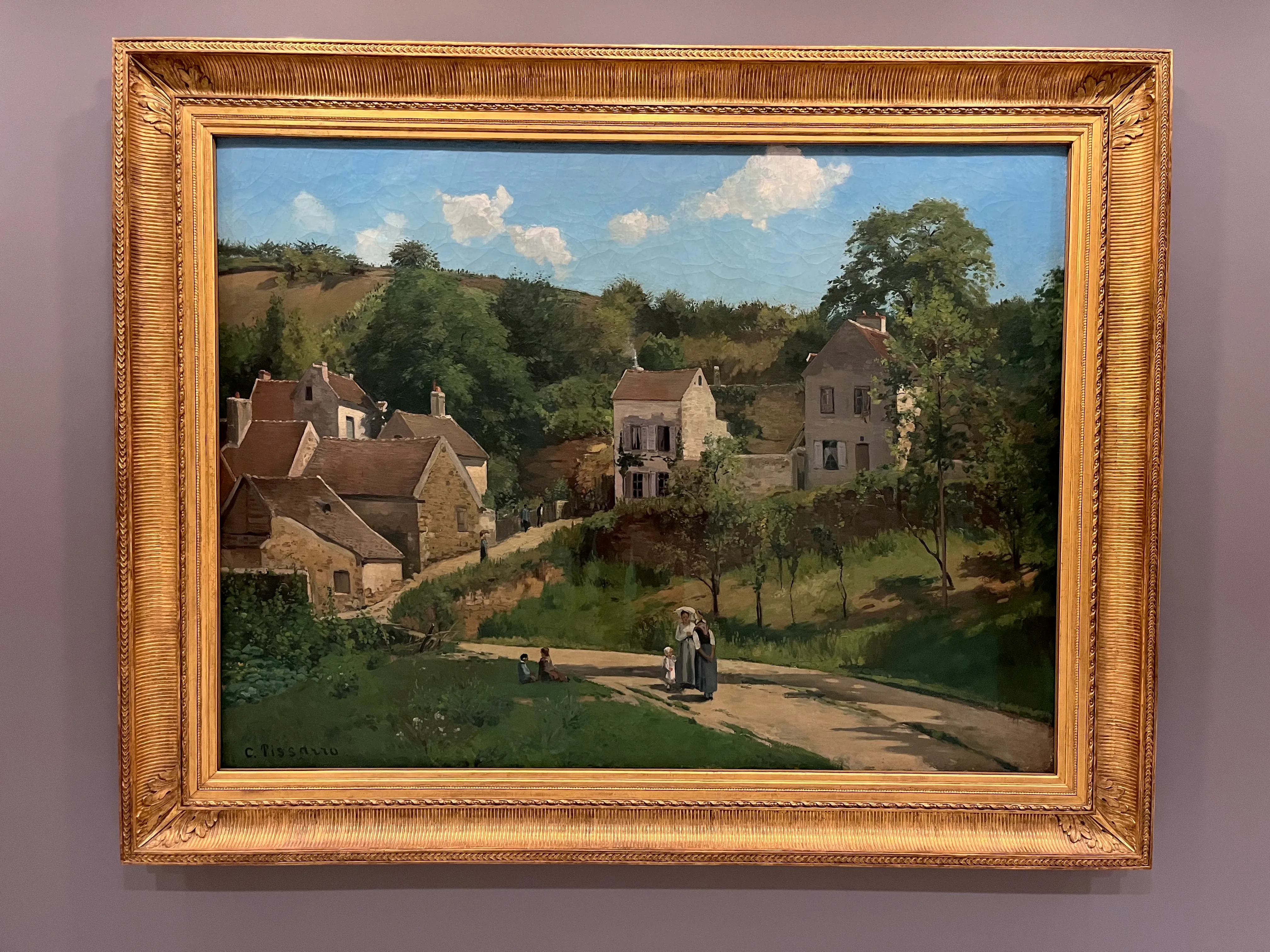
The Hermitage at PontoiseThe Hermitage at PontoisePreviousNext

Camille Pissarro

b. 1830, Saint Thomas, Danish West Indies; d. 1903, Paris

The Hermitage at Pontoise, ca. 1867

Oil on canvas

Between 1866 and 1883 Pissarro lived on and off in Pontoise, a village northwest of Paris. He captured the rural environs and its working-class inhabitants in a series of paintings. In this monumental landscape-the chronological starting point of the Guggenheim New York's collection-Pissarro depicted a winding path at the base of a cluster of houses. Many critics considered his unsentimental images of such a commonplace subject to be vulgar-especially given the painting's large scale, which was traditionally reserved for historical themes and other elevated subjects. Yet even as Pissarro persisted in challenging the types of landscapes that merit representation in art, he was selective in what he chose to portray. This idyllic scene, with scattered groups and individuals arranged along the path, hardly reveals the societal or environmental impact of growing industrialization and tourism in the area.

Someone explained that this painting was panned when it was exhibited since it wasn’t ‘realistic’ enough.